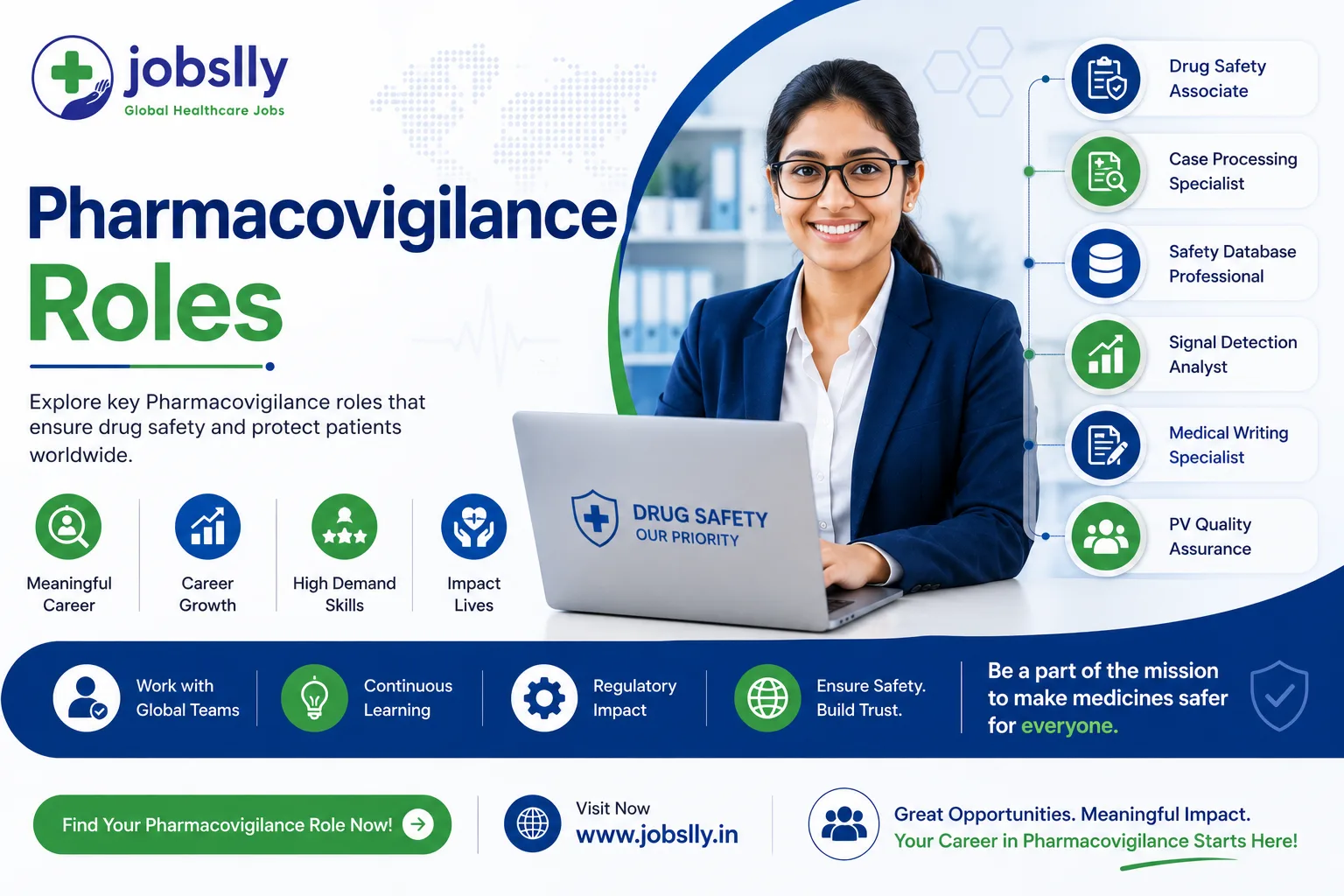
career in drug safety can open up several paths for healthcare and life-science professionals. If you’re ready to build a career around this specialization, you must already be exploring pharmacovigilance roles and responsibilities. In reality, these responsibilities cover much more than reviewing adverse-event reports.
Professionals across different positions may work with safety databases and medical assessments. Depending on your expertise, you may also be handling regulatory documentation, signal detection, quality processes, or team coordination.
Looking for Healthcare Opportunities?
Browse top-paying jobs in hospitals and clinics worldwide.
In this practical guide, you’ll get a comprehensive idea of the roles and responsibilities of pharmacovigilance professionals. With this approach, you can identify suitable roles that match your education, skills, and career goals.
What Does a Pharmacovigilance Team Actually Do?
Pharmacovigilance, which is mostly associated with drug safety, involves collecting information about possible adverse effects of medicine and evaluating them. The work mostly begins during clinical development and may continue even after a product reaches the market.
The responsibilities behind pharmacovigilance jobs india are not limited to checking whether a patient experienced a side effect. Teams have to determine:
· Whether an event is medically significant
· Whether it has been reported before
· Whether a pattern is emerging
· Whether further action or regulatory reporting is required
That is why pharmacovigilance jobs can look quite different from one another, even within the same organization.
Different Pharmacovigilance Roles and Responsibilities to Explore
Professionals from different areas of specialization may find pharmacovigilance Jobs in India relevant. You may work directly with individual safety cases, or analyze broader trends. Others may focus on regulatory and quality requirements.
|
Pharmacovigilance function |
Responsibilities |
|
Case processing |
Recording, validating and documenting safety cases |
|
Medical review |
Clinical assessment of adverse events |
|
Signal detection |
Finding possible patterns in safety data |
|
Regulatory safety |
Safety reports and regulatory submissions |
|
Quality assurance |
Processes, audits and compliance checks |
|
PV management |
Team coordination, oversight and safety governance |
Now, let’s evaluate each of the pharmacovigilance roles and responsibilities in detail.
1. Case Processing Teams Handle the First Review
Information on drug safety often enters a pharmacovigilance system through case processing. A healthcare professional, patient, clinical trial, medical literature or any other approved source may send a report. A case-processing professional is responsible for the following duties.
· Checking the report to determine whether it contains enough information to be considered a valid case
· Entering relevant details about patients, products, or events into a safety database
· Applying appropriate medical terminology and coding
· Developing a clear case narrative
· Where required, following up for missing information
· Checking the case before it moves to the next stage
· Operating within established timelines for reporting
It’s crucial to maintain accuracy here. This is because, a small error in patient history, medicine details or event description can affect safety assessment later.
On gaining experience, professionals may move from processing individual cases to quality review, team supervision or more specialized safety functions.
2. Medical Reviewers Put the Safety Data into Context
At times, professionals engaged in pharmacovigilance jobs help to determine what the available evidence actually suggests. Drug Safety Physicians and other qualified medical professionals may assess the following:
· The medical history of the patient
· The nature and seriousness of the event
· Other medicines or conditions that could explain the outcome
· The timing between treatment and the event
· Whether healthcare professionals expected the reaction
· The chance of an association between the product and the event
This clinical judgement provides context that cannot always be obtained from databases. This is also one area where professionals with medical backgrounds may later explore Medical Affairs Jobs in India. You may particularly explore this avenue when you want to establish a career in scientific communication, medical strategy, or broader pharmaceutical functions.
3. Signal Detection Teams Look for Emerging Risks
Once organizations accumulate large volumes of safety data, specialists need to scrutinize that information to detect emerging risks. Signal detection professionals may compare reported events based on different factors like:
· Frequency of an event
· Severity
· Characteristics of the patient
· Exposure to medicine
· Timing of reported reactions
· Similar cases across different sources
A potential signal does not automatically mean that a drug is unsafe. It is a starting point for further investigation.
Then, professionals may examine the available evidence and conduct additional analysis. For professionals interested in specialized pharmacovigilance roles and responsibilities, analytical thinking can be a valuable trait.
4. Regulatory Teams Turn Safety Findings into Reports
Pharmacovigilance jobs can also be associated with regulatory aspects. Since drugs available in the market must comply with regulatory requirements, professionals need to compile safety information into reports. These reports are then submitted to health authorities within specified timelines. Depending on their position, regulatory safety professionals may work on:
· Periodic safety reports
· Development safety reports
· Documenting risk management
· Responses to regulatory queries
· Safety-related submissions
· Supporting documentation for inspections
Apart from possessing strong writing skills, professionals must understand the safety data and regulatory requirements governing the document they are preparing. The report must also be consistent with the source data. In case the information is incomplete or poorly interpreted, the problem can extend beyond the document itself.
5. Quality Teams Keep PV Processes on Track
If you’re exploring non clinical jobs, you may be a part of quality teams that look into the system behind the work. Quality professionals are responsible for checking whether a case has been entered correctly, and whether all the processes are being followed consistently. In this position, your work may involve:
· Reviewing compliance with standard operating procedures
· Conducting PV audits
· Checking documentation
· Tracking deviations and corrective actions
· Ensuring readiness for inspection
· Reviewing the effectiveness of quality systems
This function is particularly important when companies handle safety operations across multiple products, countries, or external service providers.
Conclusion
If you’re considering non clinical jobs in India, a career in the field of pharmacovigilance can be rewarding indeed. Drug safety extends beyond processing adverse-event reports, and opens up fresh opportunities for case specialists, medical reviewers, signal detection professionals, regulatory teams, and quality experts. Each of them contributes in a different way to the safety process.
Now that you’re familiar with the key pharmacovigilance roles and responsibilities, explore relevant openings on Jobslly. The job platform can help you find opportunities aligned with your qualifications and professional goals.