Medical Science Liaison (MSL) Career Guide: Skills, Courses & How to Break In from Clinical Practice - Jobslly Blog
Medical Science Liaison (MSL) Career Guide: Skills, Courses & How to Break In from Clinical Practice

career23 Sept 20264 min read
Share:

Key Takeaways

What you'll learn from this article

  • 1MSLs lead non-promotional scientific exchanges.
  • 2Evidence appraisal adds value to clinical skill.
  • 3Courses help fill in Medical Affairs knowledge gaps.
  • 4Industry-specific resumes should showcase success.
  • 5Networking and portfolio work can support transition.

If 70-hour work weeks, gruelling night shifts, and clinical burnout are overshadowing the passion that brought you into healthcare, you are not alone.
Thousands of clinicians, pharmacists, and medical researchers hit a plateau where they ask the same crucial question: How do I pivot into a high-impact, sustainable career without throwing away years of medical training?

Far from promotional selling or commercial targets, the MSL role is strictly scientific and peer-driven. As a MSL, you operate at the intersection of medicine and corporate strategy.
Instead of treating one patient at a time under endless shift pressure, you influence healthcare trajectory on a global scale.
This comprehensive guide breaks down everything you need to know to break into Medical Affairs: from the core competencies and top certifications to the exact step-by-step strategy for transitioning from the clinical floor to a premier MSL role.


Looking for Healthcare Opportunities?

Browse top-paying jobs in hospitals and clinics worldwide.

Explore Jobs

What Does a Medical Science Liaison (MSL) Do?  

A MSL is a field-facing Medical Affairs professional who develops scientific relationships with healthcare professionals, investigators, and key opinion leaders. MSLs provide relevant evidence and bring field insights back.

Responsibility

Typical focus

KOL engagement

Scientific relationships with external experts

Scientific exchange

Clinical evidence, disease areas, and research

Insight gathering

Unmet needs and evidence gaps

Research support

Evidence-generation and study activities

Collaboration

Medical Affairs and cross-functional teams

Compliance

Accurate, balanced communication

You should also know how compliance, data, and strategy play a major role in Medical Affairs.

Why Transition from Clinical Practice to an MSL Role?  

Broader Impact  - Clinical practice focuses on individual patient care. MSL work shifts toward scientific exchange, evidence and insights that can inform wider medical decisions.

Different Work Dynamics  - Many MSL positions are field-based. You will get to travel.

Career Growth - Medical Affairs has MSL, Medical Advisor, specialist, management and leadership career paths. Progression is function and expertise-dependent.

Core Skills Required for MSL to Succeed

Primary Skill

What It Involves

How MSL Uses It

Clinical & Scientific Knowledge


Building a robust knowledge base in the therapeutic area, study designs, outcomes, evidence and clinical relevance.

Discussing clinical data with healthcare specialists and answering scientific questions will feel natural.

Relationship Building and Strategic Communication

Active listening, asking appropriate questions, explaining difficult science, creating professional credibility.

Science-based, meaningful conversations with KOLs & healthcare experts.

Business Acumen and Cross-Functional Collaboration

Recognizing the function of Medical Affairs within the framework of clinical development, regulatory, pharmacovigilance, market access and commercial teams.

Working cross-functionally while remaining focused on the medical and scientific aspects of the role.


Bridge the Knowledge Gap  

For healthcare professionals looking to transition into Medical Affairs, Academically’s Executive Programme for MSL  might be a systematic way to train around the skills and practical knowledge expected of a MSL career.

The programme can help learners build their understanding of Medical Affairs, strengthen scientific communication, and develop the practical skills needed to engage with healthcare professionals and key opinion leaders.

This can be particularly relevant for MBBS, PharmD, MD, M.Pharm, B.Pharm, life-science and other healthcare professionals who want to explore an MSL career and understand how to transition from a clinical or scientific background into Medical Affairs.

Course area

Why it helps

Medical Affairs fundamentals

Industry context

MSL-focused training

Field medical exposure

Good Clinical Practice

Research-compliance knowledge

Clinical trial methodology

Evidence interpretation

Medical writing

Scientific communication

Stakeholder management

Professional engagement

How to Break In from Clinical Practice

Learning how to write a MSL resume that gets shortlisted is just as important as upskilling yourself.

MSL Transition Flowchart  

Clinical / Life Sciences Background
              ↓
Identify transferable skills
              ↓
Learn Medical Affairs + compliance
              ↓
Choose a therapeutic area
              ↓
Build portfolio evidence
              ↓
Rewrite Resume + LinkedIn
              ↓
Network with Medical Affairs professionals
              ↓
Apply to MSL + adjacent roles
              ↓
Prepare for interviews
              ↓
Enter Medical Science Liaison Field


Conclusion: Turn Clinical Expertise into Industry Value  

Landing an MSL role means translating your clinical expertise into direct hiring value. By pairing evidence appraisal with targeted networking and a strategic resume, you prove to recruiters that you can convert complex scientific data into actionable insight.


Jobslly features exclusive Medical Science Liaison career opportunities for healthcare professionals who want to bridge the gap between clinical research and commercial execution. The opportunities available include Medical Science Liaisons (MSLs), Medical Advisors, Medical Information Specialists and Regulatory Affairs Leads in pharmaceutical, biotechnology and medical device firms.

Looking for Healthcare Jobs?

Browse thousands of opportunities on Jobslly

Find Medical Science Liaison Jobs →




Dr Aditi Chandra

Dr Aditi Chandra

Medical Content Writer Intern | Registered Dentist

Bachelor of Dental Surgery (BDS) | PG Diploma in Hospital & Healthcare Management, Symbiosis University | Fellowship in Endodontics, Saveetha University | Fellowship in Aesthetic Dentistry, Greifswald University

Dr Aditi is a dentist with over four years of clinical and healthcare experience, combining expertise in dentistry, healthcare management, medical communication, and content development. Beyond clinical practice, she has experience creating evidence-based healthcare content, designing patient education materials, and producing digital health communications, with a strong focus on translating complex medical information into clear, accessible, and engaging content for diverse audiences. She is also skilled in healthcare marketing, workflow optimisation, and strategic communication. Currently, Dr Aditi serves as a Medical Content Creator Intern at Academically Global, where she develops educational content for healthcare professionals, students, and international licensing aspirants, committed to delivering accurate, up-to-date, and research-backed information that empowers readers to make informed educational and career decisions.

Frequently Asked Questions

1. Can MBBS Doctor become Medical Science Liaison?
Yes, an MBBS background can be relevant to MSL roles but the criteria differ by employer, therapeutic area and seniority. The present job advertisements in India are offering a variety of qualification options such as medicine, pharmacy, PhD and general life sciences background. Employers also look for scientific communication, stakeholder engagement, therapeutic skills and relevant research or industrial experience.
2. Can a PharmD be a MSL?
Yes. PharmD offers a solid science background in therapeutics, medications, pharmacology and clinical evidence. But a degree does not mean you will get an MSL post. Therapeutic-area expertise, scientific presentation abilities, communication, stakeholder management and related research or industry exposure are all things that employers may seek for. If you have little corporate experience, a concentrated portfolio can show these qualities.
3. Is MSL a clinical or a non-clinical career?
MSL is an industry-based medical affairs position and is not a direct patient care role. You still use medical and scientific knowledge, but the work is focused on scientific interaction, external expert participation, evidence, insights and medical strategy. Many of the roles are field based and the role may require regular contact with healthcare professionals and travel.
4. Do I need to have a MSL certification to acquire a job?
You don't have to be certified to get all MSL jobs. A recognized course can help you comprehend Medical Affairs principles and exhibit structured learning, but employers still want to see your degree, scientific ability, communication, experience and fit. Certification is most valuable when it serves to address an actual knowledge gap and is tied to practical projects or experience.
5. Would a structured guidance for future MSLs be of value?
Yes. The value of certification depends on your present knowledge and the function you want, therefore verify the curriculum against current employment needs, don’t assume certification is a guaranteed route to getting hired.
6. What skills should I put on an MSL resume?
Focus on: Evidence interpretation, scientific communication, presentations, stakeholder involvement, research, therapeutic knowledge, clinical trial comprehension, teamwork, and compliance awareness. Show what you communicated, who the audience was, what evidence you used, and the result. Match examples to the therapy area and specific job description of the company.
7. Can I be an MSL without pharma experience?
It’s conceivable, however the path depends on the employer and the function. Some firms look for people from the fields of medicine, pharmacy, research or life sciences, while other positions require expertise in the sector. If pharma expertise is minimal, a related portfolio, training in Medical Affairs, understanding of the therapeutic area, networking and adjacent roles can help establish readiness.
8. Is an MSL function sales-related?
The MSL function is based on scientific non-promotional involvement—not sales promotion. Professional supervision can separate scientific discussion from advertising messaging and also raise ethical boundaries. MSLs may work internally with commercial teams but external scientific communication needs to be carefully managed at all points of interaction, following company policies, regulations and compliance mandates.
9. Is MSL a work from home position?
MSL employment are often field-based due to the need to directly interface with healthcare professionals and scientific specialists. But expectations for travel, office, remote varied by employer & territory. This variance is visible in current India postings. Review each job description for field coverage, travel needs, customer-facing activity, and stated work paradigm.
10. How should you transition from clinical practice to Medical Affairs?
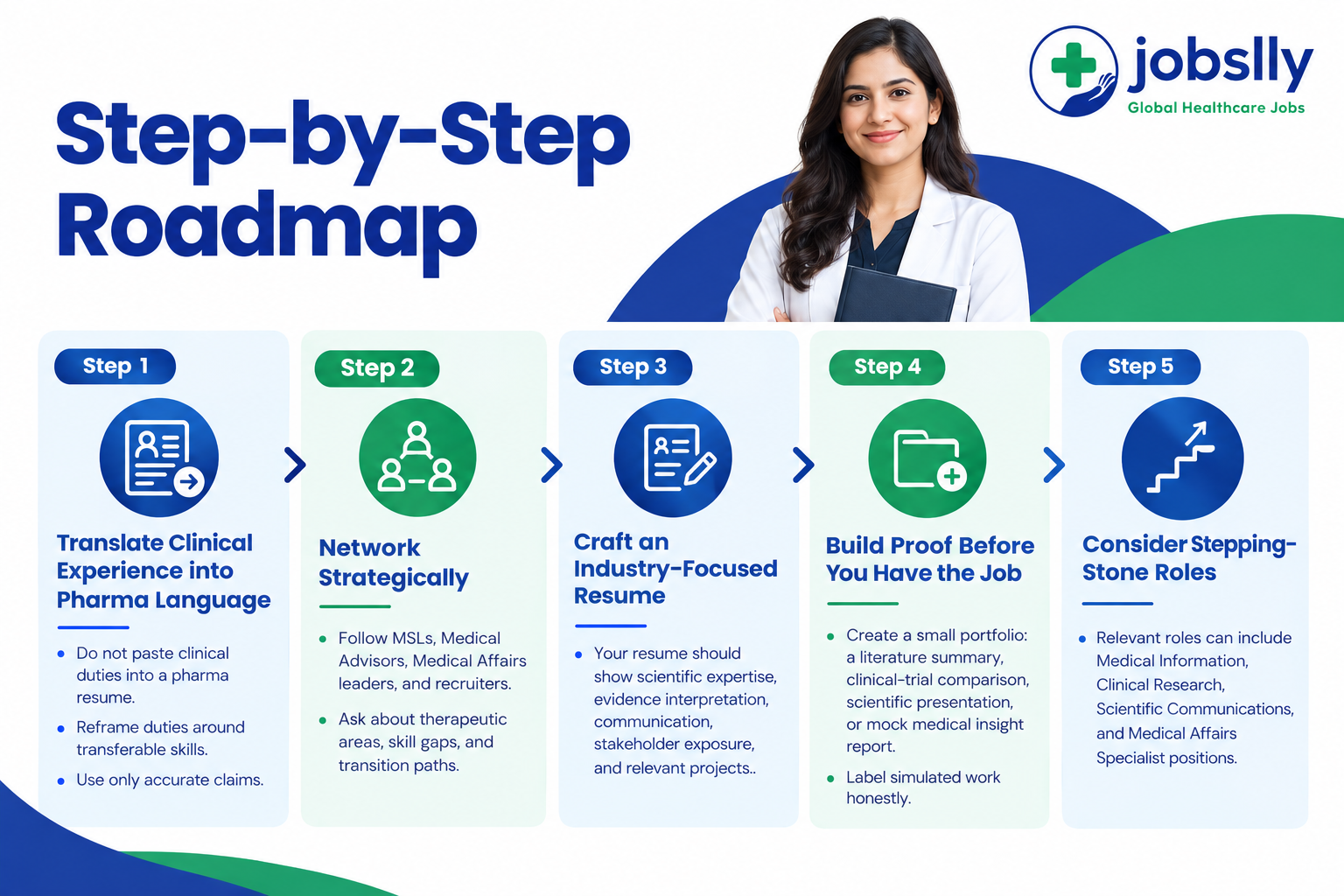
Practice evaluating evidence and communicating science. Choose a therapeutic area. Develop sample work products and redo your resume to highlight relevant successes. Engage with MSLs and Medical Affairs professionals. Look for MSL or similar jobs that match your background.

Never miss an update

Get the latest healthcare career insights delivered to your inbox.