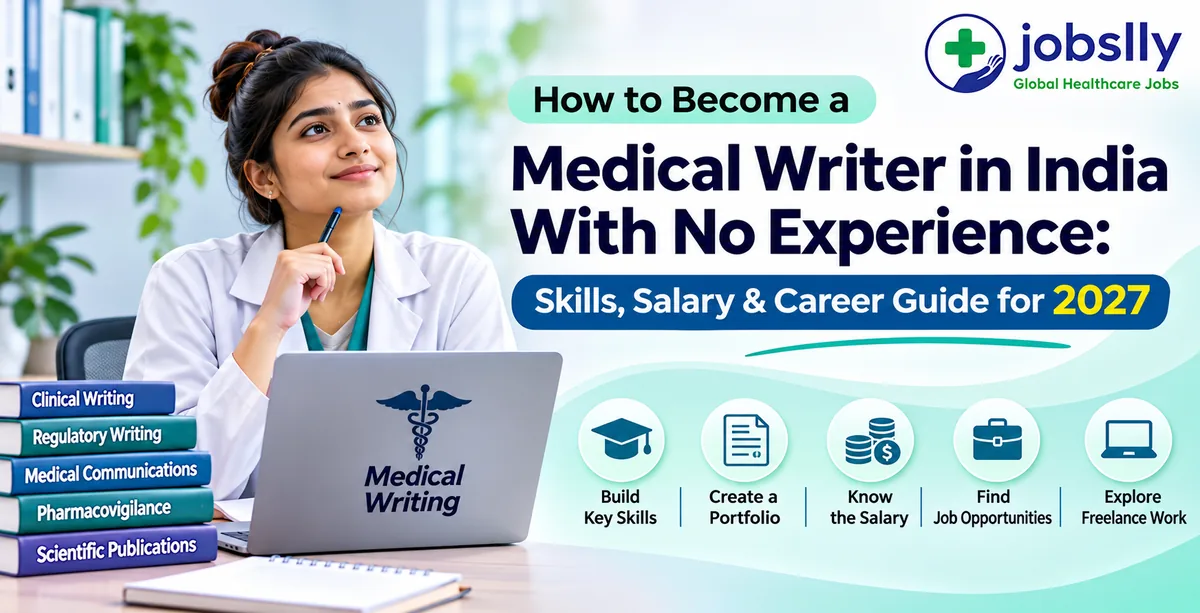


Looking to know how to become a medical writer in India without any experience? This guide walks you through the necessary skills, knowledge, tips on building your portfolio, entry level roles and salaries. Whether you’re a doctor, dentist, pharmacist or life sciences graduate, this article will show you how to get started as a medical writer, work freelance and start an exciting non-clinical role within healthcare.
What Does a Medical Writer Do?
Learning how to become a medical writer starts with understanding who your target audience is, this could be patients, doctors, researchers, businesses or regulators. While learning how to become a medical writer you may produce:
clinical study reports
Explore JobsLooking for Healthcare Opportunities?
Browse top-paying jobs in hospitals and clinics worldwide.
protocols
manuscripts
safety narratives
patient leaflets or
health-related articles.
Depending on whether you want to write regulated documents or patient facing documents will determine the best route to how to become a medical writer. As a healthcare professional, I believe your medical writing should ensure the evidence is preserved and presented clearly. Do not overstate the benefits, hide the safety issues or confuse correlation with causation.
Can You Enter Medical Writing With No Experience?
Yes. Learning how to become a medical writer can begin with trainee or associate roles which do not require prior titles. The practical answer to how to become a medical writer is to demonstrate these medical writing skills through your portfolio.
Degrees such as MBBS, BDS, B.Pharm, PharmD, Nursing or Life Sciences will provide you with subject knowledge but will not necessarily provide you with writing skills. To start learning how to become a medical writer pick one niche and learn the format, ask for feedback.
Step-by-Step: How to Become a Medical Writer in India
1. Choose a Specialisation
Content writing is best for clear communicators.
Scientific writing suits research oriented professionals.
Regulatory writing uses protocols and study reports.
Pharmacovigilance covers safety narratives.
This will help you to be more focused on how to become a medical writer as you will be able to produce examples and apply for relevant roles. You do not need to know all niches to understand how to become a medical writer, pick one and become an expert.
2. Learn Document Formats and Guidelines
Once you have decided what niche you want to how to become a medical writer, you will need to learn what format they need to be in. Each niche will have different formats such as:
healthcare articles
patient FAQs
abstracts
reviews
protocols or
clinical study reports.
To understand how to become a medical writer you will need to know what guidelines are relevant. A good starting point would be the ICH E6(R3) Good Clinical Practice guideline for clinical trial responsibilities. Ensure you know what the current guidelines are and what your employer expects. This turns how to become a medical writer into a practical plan.
3. Build Three to Five Portfolio Samples
A key step in how to become a medical writer is to create 3-5 examples in your portfolio. Ensure they are cited using public sources and honestly state what is labelling practice. Examples could include:
evidence-based article
plain language summary of a clinical study
structured abstract or literature review
patient leaflet or
a mock safety narrative based on a fictional case.
Anyone learning how to become a medical writer should always cite sources and ensure patient data is protected. Ensure you are aware of the statistics and limitations. Often having a portfolio will give more evidence to recruiters than just having a certificate alone. As a freelance medical writer you can use these examples to pitch for relevant projects.
4. Take a Focused Course
A course that teaches how to become a medical writer should cover different formats, researching, medical terminology, citing and basics of regulation. Take a medical writing course that provides feedback and examples for your portfolio. Having a relevant degree, good writing skills, upskilling from good course and relevant examples can be more important. This is a great starting point in how to become a medical writer.
5. Update your resume
When mapping out how to become a medical writer, make sure your headline is clear when you write the resume. Use something like ‘BDS | Aspiring Medical Writer | Healthcare Content’. Highlight your research, clinical documentation, case presentation, patient education or drug information experience. Honestly state what is label practice. Ensure you explain the skills you have gained from each project. Having a specific profile will help employers link your background to how to become a medical writer.
6. Apply Strategically and Practise Writing Tests
Candidates learning how to become a medical writer should search for relevant non clinical jobs using terms like:
medical writer trainee
medical writer associate
junior medical writer
scientific writer
medical content writer
publication or pharmacovigilance roles.
Ensure you know what experience is required for each role as some will welcome freshers and some will not. You may be asked to proof-read a paragraph, summarise a study or correct references. When learning how to become a medical writer, ensure you follow the brief, word count, audience and citation style.
Skills That Help You Get Hired
An important skill in how to become a medical writer is communicating complex ideas clearly.
Research: Rely on trustworthy studies and guidelines and ensure you know the design, sample size, dates and limitations.
Scientific knowledge: Understand medical terminology, endpoints, tables and basic statistics and ask questions where data is unclear.
Citing and tools: Understand how to cite using Vancouver style, organise your references and use track changes consistently.
Professionalism: Meeting deadlines, using feedback and keeping confidential information safe. Part of how to become a medical writer is to ensure you double check any AI suggestions against the source documents. AI can often make up facts and references.
Medical Writer Salary in India: Fresher to Senior
When comparing how to become a medical writer across niches, remember the medical writer salary will vary depending on the employer, location and responsibilities. Indicative medical writer salary estimates are listed below:
Level | Experience | Typical Titles | Indicative Salary (CTC) |
Fresher / Entry | 0–2 years | Trainee Medical writer, Associate Medical Writer | ₹3–6.5 LPA |
Mid-level | 2–5 years | Medical Writer, Regulatory Writer | ₹6–12 LPA |
Senior | 5–7+ years | Senior Medical Writer, Lead Writer | ₹12–25+ LPA |
Principal / Manager | 8+ years | Principal Writer, MW Manager, Scientific Comms Lead | ₹20–35+ LPA |
The medical writer salary varies by specialisation:
Content writing roles may start around INR 2.5-4.5 LPA.
Clinical and pharmacovigilance roles may have different salaries starting from around INR 4-6 LPA.
Global CROs and Pharma companies may pay more.
As a freelance medical writer ensure you know what revenue you are making per project and how much time you are spending on admin for free.
Compare the medical writer salary offered with a fixed salary, CTC, variable salary and training.
Does your qualification impact salary?
A factor in how to become a medical writer is to know how to translate your clinical knowledge into skills relevant to the role.
MBBS/MD graduates may be good for interpreting clinical data.
BDS graduates will have knowledge of communicating with patients.
Pharmacy graduates may be good for drug safety roles.
Life Sciences graduates will have research strengths.
The medical writer salary rarely depends on your degree alone. Experience, portfolio and niche will be a factor.
Where to Find Medical Writing Jobs for Freshers
A great starting point in how to become a medical writer is to search CROs, Pharma, Biotech companies, agencies, publishers and Health Tech companies. Another option is to search on Jobslly for healthcare jobs for freshers.
As a freelance medical writer you will need to have a pipeline of clients. Ensure you know what the role involves, what you are eligible for and the location. Always check the roles on the employer careers page and never pay a recruiter.
Keep track of your progress during the job search stage of how to become a medical writer:
shortlist roles
update your CV
provide an example that fits the role and
note down the roles you have applied
search for medical writer jobs as a fresher using multiple related job titles.
Explore medical writing jobs for freshers
Can You Work as a Freelance Medical Writer?
A freelance medical writer may be a later option when exploring how to become a medical writer. You can work with agencies, publishers or healthcare clients. As a freelance medical writer ensure you agree on what the brief is before providing a quote. You may charge by the word, page, hour or project. The complexity and deadlines will impact how much you earn. Some experienced freelance medical writers charge around ₹500-2000 per hour or per page but the complexity and scope will be more important than any online benchmarks.
As a freelance medical writer you will need to find clients, agree on the scope, manage amendments, invoicing and variable workload. People learning how to become a medical writer independently can start with healthcare articles or patient education. To become a freelance medical writer ensure you have a portfolio, agree in writing what you will deliver, deadlines, amendments, payment and keep it confidential. As a freelance medical writer you should refuse any projects with made up results or references. It is a good idea to get experience in an in-house role before working on complex regulatory projects; a freelance medical writer will also need to have relevant practice.
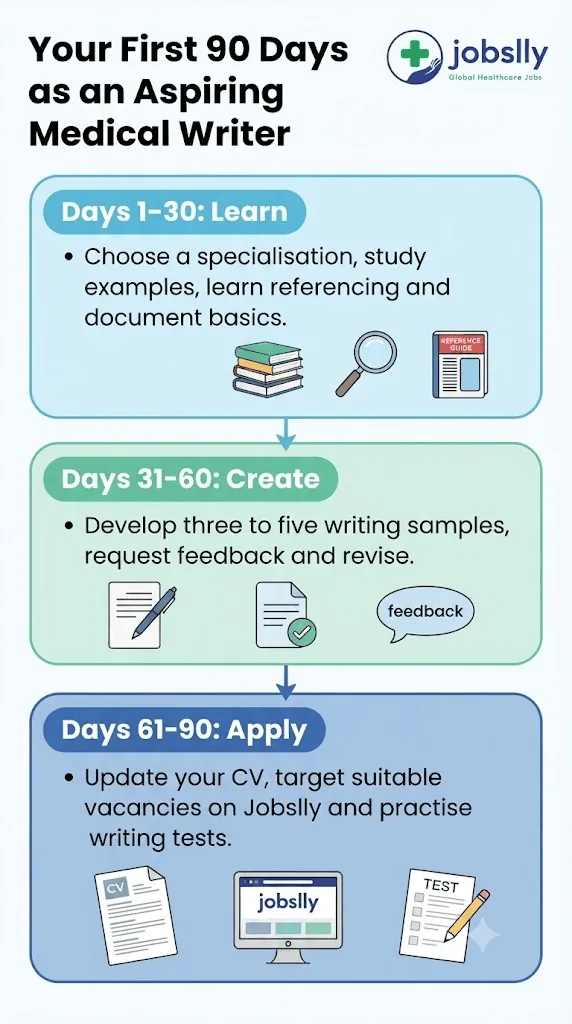
A Realistic 90-Day Plan
Getting started on how to become a medical writer can be confusing. This 90 day structured plan will help you to get started with your journey. There are 3 stages of this plan. First you learn the basics. Second, you create an impressive portfolio. Finally, target entry level roles and ace those writing tests.
Common mistakes to avoid:
A practical lesson in how to become a medical writer is to apply with examples.
Use reliable sources you can trace and ensure references are correct.
Label portfolio work honestly and keep patient data safe.
Double check any facts generated from AI.
Consider learning and mentoring.
To conclude with
As a health care professional, I believe medical writing provides an exciting opportunity to use your scientific knowledge to convey information in a clear, meaningful way. You do not need years of experience, just the drive to learn. Having a strong portfolio and commitment to improving with every piece will help you to get started. Knowing how to become a medical writer is the first step to starting a fulfilling non-clinical role within health care. Start creating some writing samples, improve your research skills and look at available opportunities on Jobslly.