So, you have heard about pharmacovigilance. Maybe from a senior, a LinkedIn post, or that one friend who suddenly got a “drug safety associate” job and now sounds very important.
And now you are wondering: Can I actually land Pharmacovigilance Jobs for freshers without experience?
Short answer? Yes. Long answer? Let us find out.
Looking for Healthcare Opportunities?
Browse top-paying jobs in hospitals and clinics worldwide.
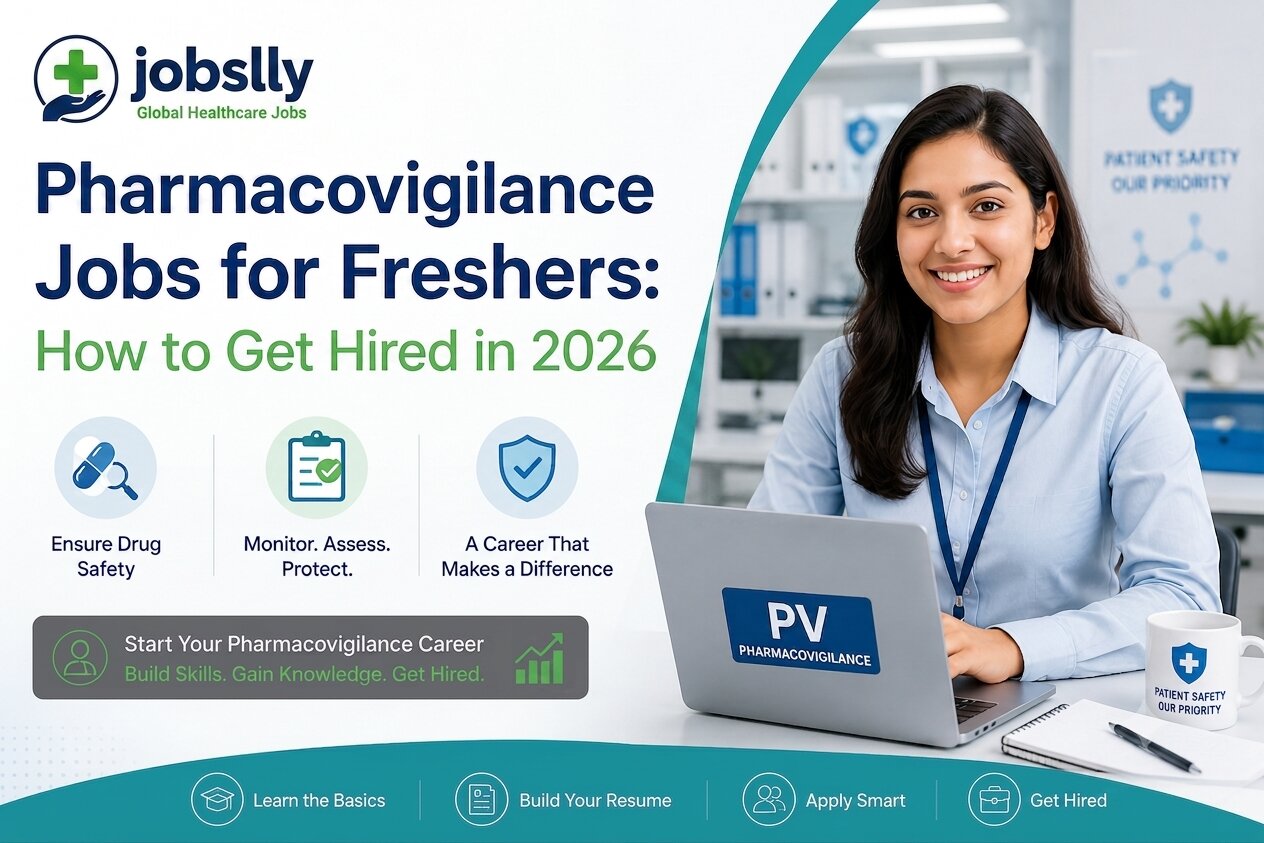
This is your roadmap to getting into pharmacovigilance in 2026.
So, What Is This Pharmacovigilance?
Now let's get the jargon out of the way.
Pharmacovigilance entails vigilance over the safety of drugs. You identify any adverse effects or adverse drug reaction. The primary role here is to ensure that drugs don't become villains post-launch.
This one requires you to be a combination of detective and health care professional. And the best thing about it is that it does not require much experience at all.
Why PV Jobs for Freshers Are Growing in 2026
If you are a graduate from
Pharmacy
Life sciences
Nursing, or
Biotech
This field is practically built for you. Here is why entry level Pharmacovigilance Jobs in India are exploding:
More drugs mean more safety monitoring
Global regulations are getting stricter
Remote PV roles are on the rise
AI tools are growing, but humans are still needed to interpret data
Translation: companies are hiring freshers faster than ever.
The Myth That Is Holding You Back
Let’s address the elephant in the room. How often do you think that since you do not have experience, you cannot apply? That is the wrong mindset.
In reality, many pharmacovigilance jobs without experience exist because companies train you from scratch, skills matter more than past roles, and freshers are easier to shape into the kind of professionals they need.
So instead of thinking, “I am not ready,” think, “Am I trainable?” That is what recruiters care about.
Types of Entry Level Pharmacovigilance Jobs
Here is where things get interesting. You do not have to stick to one role.
1. Drug Safety Associate
This is the most frequent starting point.
As part of the job, you will:
Review the reports of adverse events
Do data entry and medical coding
Assist with the case management process
This can be considered the entry-level position in PV.
2. Case Processing Executive
This sounds quite technical, doesn't it? But it’s actually not that difficult.
You might be working on:
Individual Case Safety Reports
Adhere to SOPs
Ensure data accuracy
This job suits those who pay a lot of attention to details.
3. Medical Reviewer
If you possess sound knowledge of clinical aspects, this position might suit you well.
You will be reviewing medical stories and rating the severity of the case.
It is comparatively advanced, but freshers can join after proper training.
4. PV Associate
This is the position which includes documentation along with quality checking.
Here you also need to coordinate with other teams.
It is the best choice for someone who is yet to find their niche.
Skills That Get You Hired Even Without Experience
Here is the truth: your degree alone will not get you hired. Your skills will.
Must-have skills:
Basic pharmacology knowledge
Attention to detail
MS Excel and data handling
Understanding of adverse drug reactions
Basic communication skills
Bonus skills that make you stand out:
MedDRA coding basics
Knowledge of ICH guidelines
A short online course can also boost your resume significantly.
Do You Need a Certification Course?
It is not mandatory, but it is very helpful. Without a course, you compete with thousands. But with a course, you look job-ready.
Find courses which offer practical knowledge in case processing, examples from the real world, and help with resume or interview writing.
The certificate is secondary. It’s the skillset that you should be after.
How to Build a Resume That Gets Noticed
Recruiters spend only a few seconds on your resume. So it needs to work its magic fast.
Do not write vague lines like “Fresher looking for opportunity.” Do not add irrelevant internships just to fill space. And do not make it boring.
Instead, position yourself clearly.
Skills section:
Adverse Event Reporting
MedDRA Basics
Pharmacology
Data Entry
Data Analysis
You can also add projects such as a case study on adverse drug reactions or a mock ICSR processing project.
Even self-made projects can work. You need to show initiative and understanding.
Where to Find PV Jobs Without Experience
Now it is time to hunt smart. Go for platforms like Jobslly that have curated healthcare jobs. The aim is to do targetted search not haphazardly.
Pro job search hacks:
Search using keywords like “pharmacovigilance jobs for freshers”
Use filters for 0 to 1 years of experience
Apply early, because the first 24 hours matter
Also, always follow up. Sometimes you need to take evaluation tests. Other times, you might need to prepare a cover letter.
How to Crack the Interview Even as a Fresher
The good news is that PV interviews are more about concepts than experience.
Common questions:
What is pharmacovigilance?
What is an adverse drug reaction?
What are the sources of ADRs?
What is MedDRA?
How to stand out:
Speak clearly and confidently
Give structured answers
Show willingness to learn
The point you have to get across is that you may be a fresher, but you have actively prepared and understand the fundamentals of pharmacovigilance. That alone can build trust.
The 30-Day Game Plan to Get Your First Job
Let’s make this actionable.
Week 1:
Learn the basics of pharmacovigilance
Start a short certification course
Week 2:
Build your resume and a cover letter
Create a LinkedIn profile
Week 3:
Apply to multiple jobs everyday. Don't just stop at 1-2 jobs
Practice your interview questions
Week 4:
Attend interviews
Follow up and improve
Insider Tips Nobody Tells You
Following are some of these tips that might give you an added advantage.
Referrals are generally better than random applications. Smaller firms tend to hire freshers sooner. Night shifts tend to create more openings. International BPOs could also be very good starting points.
And above all, the most important tip is that your first job need not be the best one. It just has to be the right one.
Yes, You Can Get Hired !
Getting into pharmacovigilance jobs for freshers in 2026 is all about getting to know the fundamentals, taking initiatives, and being consistent.
Think about it; every professional in the field of pharmacovigilance was a beginner at some point searching for entry level pharmacovigilance jobs.
So, begin now. Not tomorrow. Not later. Jobslly is here to help you every step of the way.